
Why Most People Fail at Using AI (And It’s Not the Tool)
I’ve been watching how people use AI tools for a while now. Same tools. Same access. Very different results.
Some people get real value. Clear answers. Better decisions. Others feel disappointed and say, “AI is overrated.”
The truth is simple:
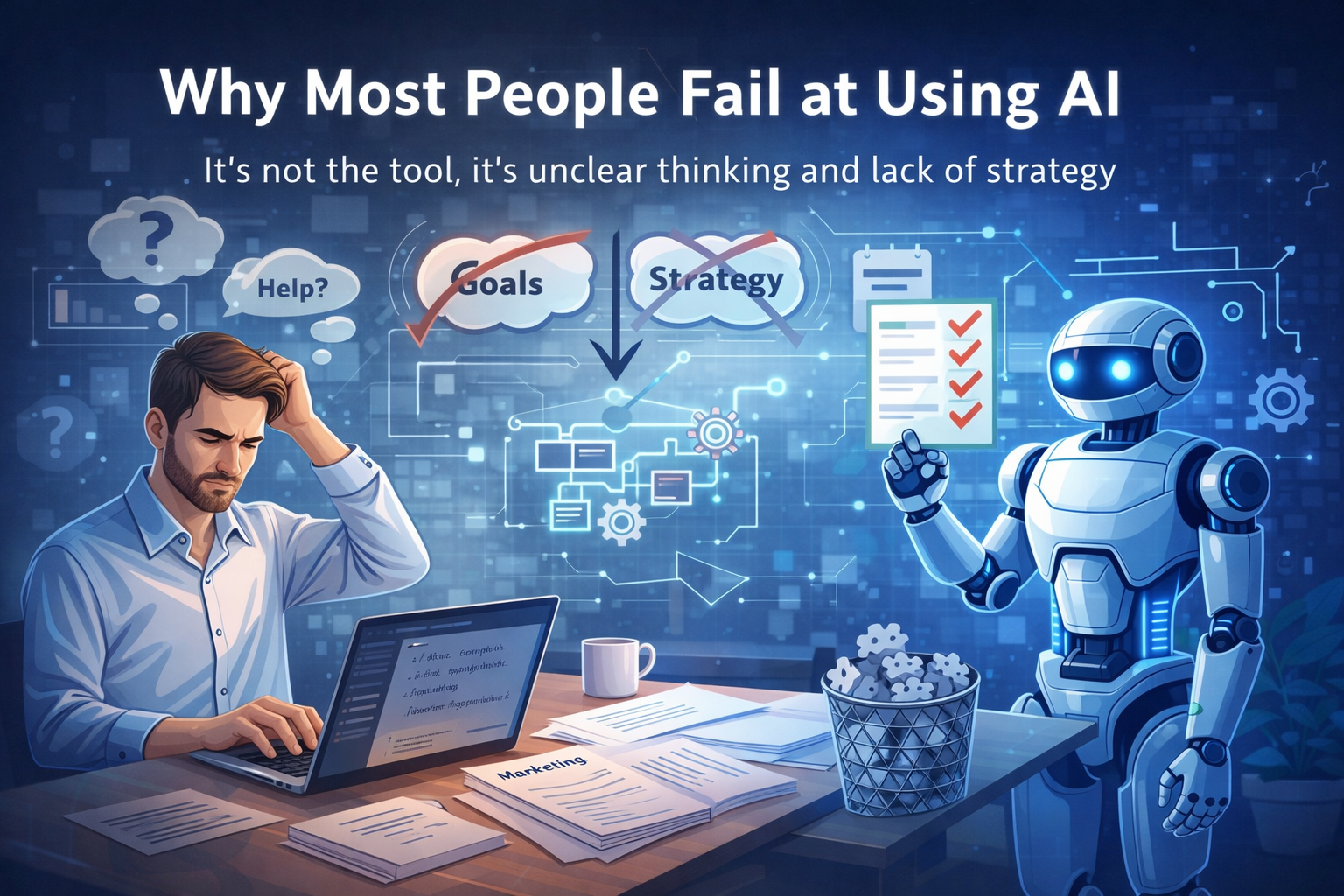
Most people don’t fail because of the AI tool. They fail because of how they think before using it.
The Real Reason AI Feels Useless for Many People
AI is fast. Powerful. Always available.
But it has one major limitation:
AI cannot guess what you actually want.
When people say “AI gave me a bad answer,” what they often mean is:
“I wasn’t clear about my problem.”
3 Common Mistakes People Make When Using AI
1. Asking Vague Questions
Most prompts sound like this:
“Write something about marketing.”
AI responds — but the output feels generic.
Not because AI is bad. Because the question was.
AI works best when you define:
- What you want
- Who it’s for
- What “good” looks like
2. Expecting AI to Think Strategically
AI doesn’t understand your business goals. It doesn’t know your standards.
It reacts. It doesn’t plan.
When strategy is missing, AI fills the gap with assumptions.
That’s why the output often feels:
- Confident but slightly wrong
- Polished but shallow
- Almost useful
3. Using AI Without a System
Many people open AI and start typing immediately.
No structure. No process. No intention.
They jump from idea to idea, regenerate answers, and feel busy — but not productive.
AI amplifies whatever system you already have.
If the system is messy, the output will be too.
How This Looks in Real Daily Work
If you’re wondering how this way of thinking translates into real, everyday workflows, it’s explained step by step in this practical guide:
How to Actually Use AI in Daily Work (A Practical Guide for 2026)
That guide focuses on real usage — not theory — and shows how clear intent, structure, and boundaries make AI genuinely useful in daily work.
What Actually Works Instead
People who get real value from AI do three things differently.
They Think First
They clarify the problem before opening the tool.
They Define the Job Clearly
They treat AI like a junior assistant — not a mind reader.
They Build Step by Step
One task. One goal. One output at a time.
AI Produces Results. Strategy Is Still Human.
AI can write faster than any human.
But deciding what to build, why it matters, and who it’s for is still your responsibility.
When you remove confusion before execution, AI becomes a force multiplier — not a frustration.
The tool was never the problem.